2000 – 2009
With the turn of the century came a billion dollar investment into the start of what was referred to as the “New Cairns” – the Cityport project incorporating the Reef Fleet Terminal, the CBD Renewal Project and the Cairns Esplanade Lagoon. Cairns was evolving from a sugar-based community into a thriving regional port that included tourism and not just agriculture, with world-class infrastructure integrating the CBD and the waterfront to take it well into the 21st Century.
The Sydney 2000 Olympics brought enormous attention to Australia, but shocked Cairns hoteliers by delivering the lowest July figures they had seen as almost every flight was diverted to Sydney leaving few seats for people to get to Cairns. Record figures followed with domestic airline passengers through Cairns increasing by 3.1% to 2.09 million in 2000-2001 from the previous year. International passenger movements grew by 3.3% to just over 1 million people largely driven by a 26.1% growth in Japanese arrivals, which went against the national trend for this market. In 2001-2002 a major milestone was once again reached in the Japanese market with arrivals exceeding 200,000. This hit the peak of 240,000 again in 1998 and this annual number held for a decade.
Cairns was serviced by direct flights from Tokyo and Nagoya with good numbers originating from Osaka. In 2000 Kean approached Stephen Gregg at TQ and TQ’s aviation specialist Unni Menon to put together a business plan for new flights from Osaka to Cairns and to do the same for existing services so they could understand if numbers were slipping and be proactive to prevent cancellations. Working with the Port Authority, TTNQ and TQ formed a Cairns Aviation Strategy team and took their Osaka proposal to JAL and Qantas in Japan and to Qantas in Sydney, to convince them that these new flights could be profitable. Qantas agreed, and in October 2001, these new flights commenced. TTNQ did extra marketing to support the mono destination packages that had been performing well for the previous year to help the new route to grow.
While Japanese business and flight loadings were growing to Cairns, Singapore Airlines announced it would cease direct flights to Cairns in March 2001 cutting a vital link for Europeans and robbing the city of 76,000 seats into and out of Cairns each year. Garuda Indonesia then announced its flights from Bali would cease from July 2001. Confidence was dented and questions asked about whether the airport should be privatised. This was followed by the collapse of Ansett in September 2001 resulting in a 40% loss in domestic capacity to Cairns.
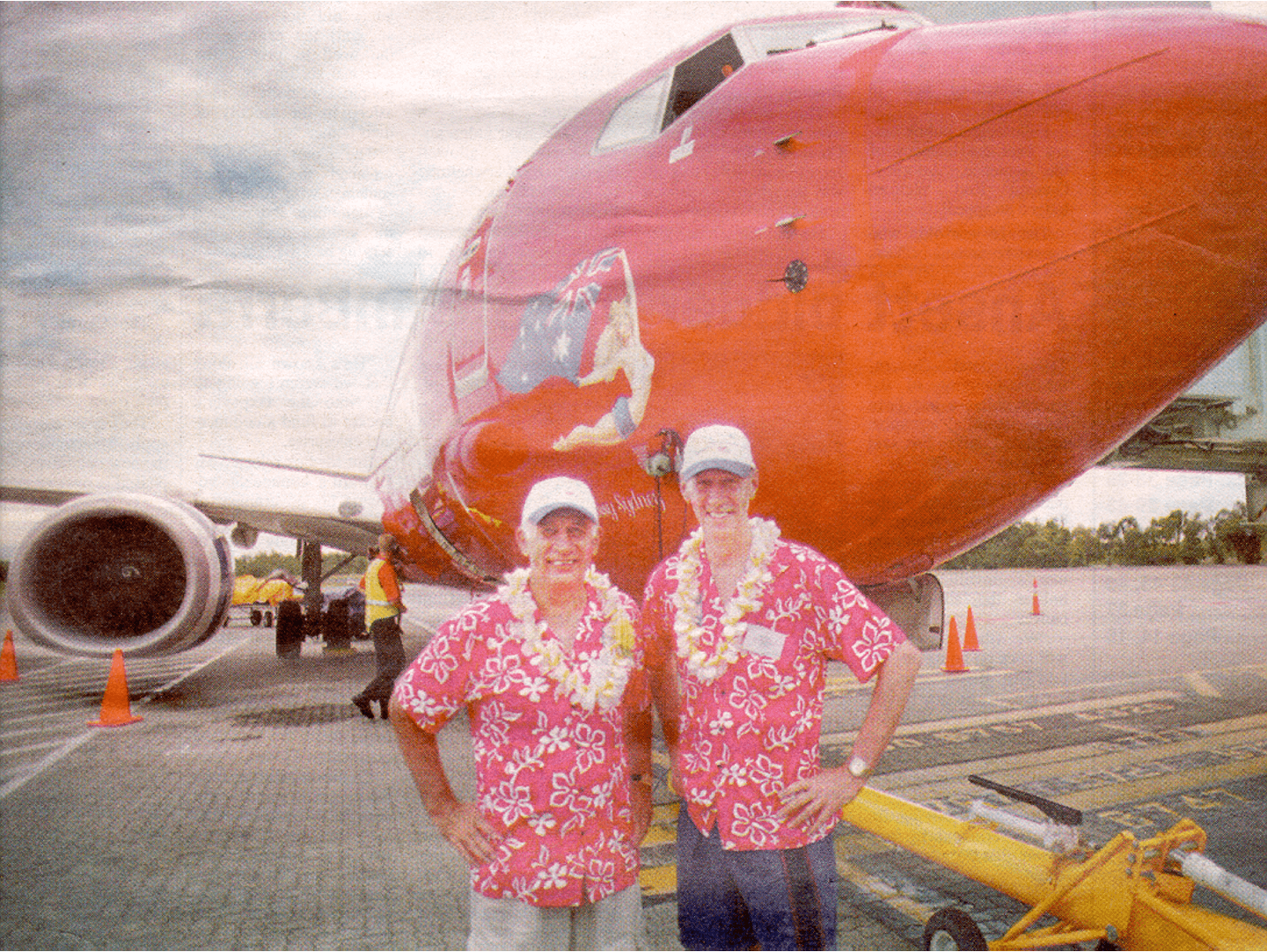
There was also good news in 2001, with budget carrier Virgin Blue arriving in Cairns in November and Qantas announcing a new low-cost subsidiary airline, Australian Airlines, to service Asian destinations. Kean immediately contacted TQ and the Cairns Port Authority to develop a strategy for Cairns to be the base for this new airline, with existing Qantas services being able to feed into Cairns from all over Australia. They were successful with operations starting in 2002 thanks to a generous incentive from the Port Authority with CEO Bob Manning discussing the landing fee reductions that Australian Airlines was seeking with his chief financial officer Neil Quinn. “Neil suggested we give them a bargain price to get an airline hub for Cairns. This resulted in six or seven 767s operating in and out of Cairns twice a day to five airports in Japan. The State Government was not happy that we got it in Cairns,” Manning recalled.
The Industry Steps up
During Kean’s term, the Board agreed to broaden TTNQ’s role and become involved in policy, economic and regional development, sustainable tourism and air access negotiations to further grow the destination. A new tourism development role was created in 2001-2002 to improve service delivery to the sub-regions and the Alliance for Sustainable Tourism. Partnership agreements were finalised with local tourism bodies representing Port Douglas and Daintree, Gulf Savannah and the Tablelands, with more to come the following year to maintain a united and consistent strategy to drive growth across the region.
After four years Kean felt he had turned the organisation around and helped to recruit former ATC Deputy Managing Director Bill Calderwood to take on the role in 2002 and maintain the destination’s momentum. “If you want to run a regional tourism body then TTNQ is the one because it’s bigger than some States and very challenging. At the time it was the second largest international destination behind Sydney,” Calderwood said.
The industry’s success lay in it being well informed and excelling in engaging with the industry overseas. “We ran annual tourism industry forums with experts to talk to industry about issues and trends. As an organisation we were very keen to pick the brains of the tourism bodies so we could be one step ahead in terms of knowledge and get funds in terms of leverage.”
Partnerships also played a vital role. Calderwood joined the marketing committee of Australian Airlines, giving TTNQ a seat at the table in shaping how its $18 million three-year marketing budget was spent. “We had a lot of opportunities with Australian Airlines being based in Cairns. It was an important time for the destination as we were able to work with the airline to maximise the success of routes they were flying.”
He maintained a strong working relationship with the Cairns Port Authority, where TTNQ was seen as the airport’s de facto marketing arm, driving inbound traffic to the region. Funding support remained solid, with contributions from TQ, TA, membership fees and occasional grants helping to sustain and grow the organisation’s efforts.
Not long after he started, Calderwood was approached by Tablelands Mayor Jim Chapman and TTNQ’s Destination Management Director John McIntyre who had identified funding to develop heritage sites. TTNQ was working out of the old Mulgrave Shire Council Chambers and used the $1.6 million funding to develop the historic building into a modern interactive visitor centre and renovate the upstairs offices into a functional working environment, which Calderwood said was a major boost in the way TTNQ engaged with the public.
Calderwood also formed Tourism Action Group teams made up of strategic thinkers to come together to help future proof the Tropical North Queensland tourism industry. These groups were divided into five key markets: business events, domestic, backpackers, gay and lesbian, western and eastern hemisphere. This was invaluable in getting the industry to work together with people such as Raging Thunder’s Fred Ariel and Queensland Backpacker’s Stephen Welsh bringing their expertise in their special interest area of backpacking.
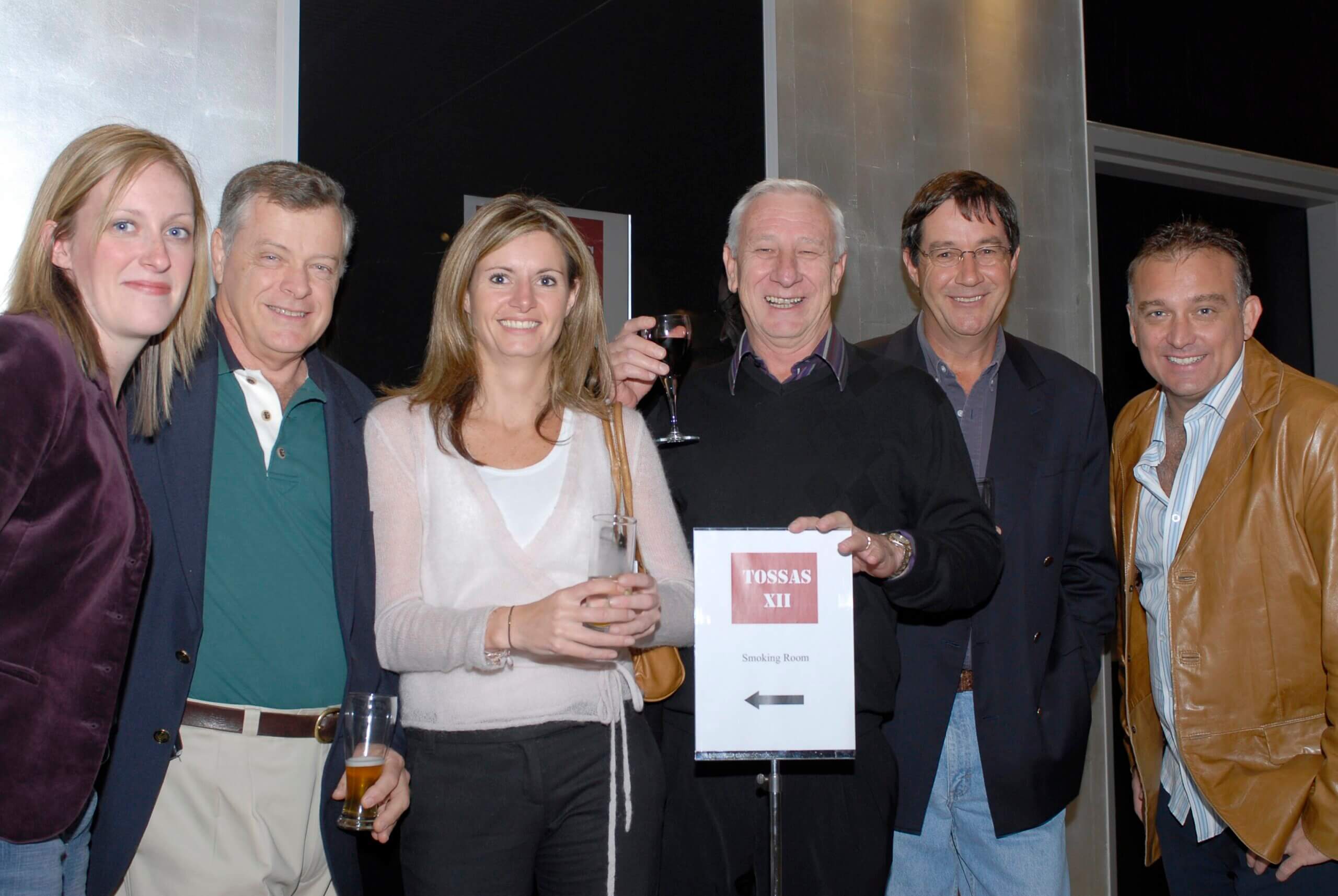
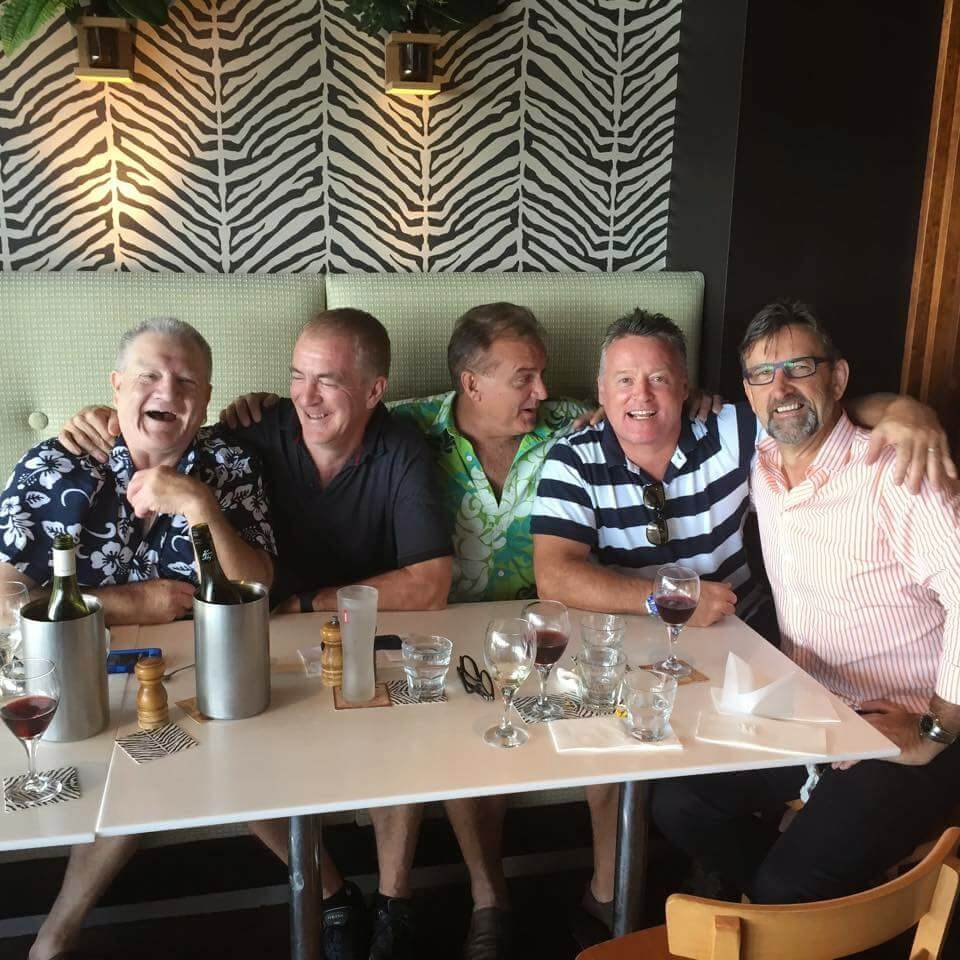
International trade marketing was a critical pillar of success throughout the 90s. During this time, a core group of industry ‘road warriors’ emerged. These included Todd Parker, Robbie Bastion, Michael Healy and James Dixon. They were regularly joined by Andrew Steel, Ron Livingston, Judith North, Chris Cowans, Cheryl Kelly, Ros Harries, Michael Bowmaker, Paul Kamsler jr, Rod Punshon, Angela Freeman, Stephen Olle, Peter Blackburn, Chris McKinley, Phil Hobbs, Lloyd Smith, Marc Ryan, Gary Young, Mark Burns, Patrick Blewitt, Paolo Gambino, Claudia McFadden, Rosie Douglas, Sharyn Brydon, Marc Sleeman, Michael Heaver, Rob Prettejohn, Judy Freeman, Michael Nelson, Barbara Thomson, and Shelagh Murphy. They travelled the world promoting the region alongside TTNQ’s staff Leigh Sorensen, Paul Sumner and Harry Nihori.
Under Calderwood’s leadership, the phrase Cairns & Great Barrier Reef became a central part of the region’s international brand identity, particularly in Asia where it had a stronger resonance. “The Great Barrier Reef is one of the best-known tourism experiences in the world and Cairns is the gateway, so we needed to work to our strength. It would work better to integrate the sub-regions to get more spin off and extend length of stay.”
One of the more controversial name changes was the Cairns Highlands which came after Calderwood worked with the Atherton Tablelands tourism bodies to present the destination in a better light to increase dispersal and length of stay. However, the two mayors pushed back saying the name couldn’t be changed just because someone thought it was a great marketing idea. Coffee Works at Mareeba used the name extensively but Calderwood moved on saying he had better wars to fight.
Calderwood left in July 2005 to establish Skyrail Asia but returned to the organisation in 2009 to 2011 as the first Chair to receive a fee. The Board recognised that the time previous chairs had invested a substantial amount of time into the organisation that kept them away from other business opportunities. Stephen Olle who was appointed Chair in 2005 to 2009 was on the selection committee and recalled Calderwood going into the interview with a PowerPoint presentation outlining his plans for TTNQ. “We had never seen one before and were very impressed. When he walked out, we said ‘I think we got the job’ as it was like he was interviewing us. We all knew him and liked his vision for the international markets, particularly Asia. We had just dipped our toes in the Japanese market and had a long way to go.”
Opportunity Through Adversity
Tourism Tasmania CEO Rob Giason was tapped on the shoulder by Calderwood to take over as TTNQ CEO in 2005. Excited to join a membership-based organisation with a solid industry reputation and strong international visitation, Giason quickly discovered he was in for a turbulent ride. Just two weeks after arriving in Cairns, Chairman Cam Charlton called with a warning – Daikyo was about to make an announcement, and he believed the company might be pulling out of Cairns. “We quickly entered a period of turmoil. My first official function was the farewell for the Daikyo CEO, a company that had poured billions of investment dollars into tourism infrastructure in the region,” Giason recalled.
Things escalated further in June 2006, when Australian Airlines pulled out of the market. Two years later, Qantas dropped its Narita double dailies, shutting off a major pipeline for the region’s largest inbound market. “Overnight, the tap was turned off for the 240,000 Japanese visitors we were receiving annually. I had history with Jetstar and was able to work with them to get services in, but there was a lot of resistance from industry because there were changes to the airline booking and travel industry business model.
“However, we had to be at the forefront because Japan was so important to us and had dropped to 100,000 visitors overnight.” Olle recalled the initial resistance to using low-cost carriers with TTNQ working to understand the supply side of this sector. “The trade was used to working with full-service airlines that gave them seat allotments, but the low-cost carriers wouldn’t do this. It was a five-year transition period that was helped by HIS becoming the disruptor that worked successfully with Jetstar. The emergence of low-cost carriers was one of three issues during my tenure, including the Global Financial Crisis stifling inbound tourism, and the ongoing growth of online travel agents impacting our traditional distribution model,” Olle said.
“The GFC hurt all markets and then the Chinese market started to open and offered flights to Japan for one-third of the cost of flights to Australia. We had to go to those destinations to find out what was happening as we were losing Japanese business. The GFC was the catalyst for the emergence of online travel agents with the whole distribution system changing overnight and then becoming an ongoing changing environment. It was a learning experience for everyone making it hard to plan and to influence OTAs on what to include in itineraries as we had done with wholesalers. In the old days we simply planned an in-market trip and spoke to the people who made the decisions, but we were dealing with people without offices, and we didn’t know who they were.”
Cyclone Larry in March 2006 was the first major weather event to impact the region during Olle’s and Giason’s time. Next was Southeast Queensland’s devastating 2011 floods followed by Cyclone Yasi in 2011 which halted domestic travel. The region’s largest international market was decimated later that year by the Japanese tsunami. “Valuable lessons were learnt during these tough years resulting in TTNQ devising a strategy to future proof the industry that has resulted in our region driving tourism growth in Queensland and Australia,” Giason said.
First Virgin flight 2001
First Virgin flight 2001
Max Shepherd and Mike Burgess
Max Shepherd and Mike Burgess
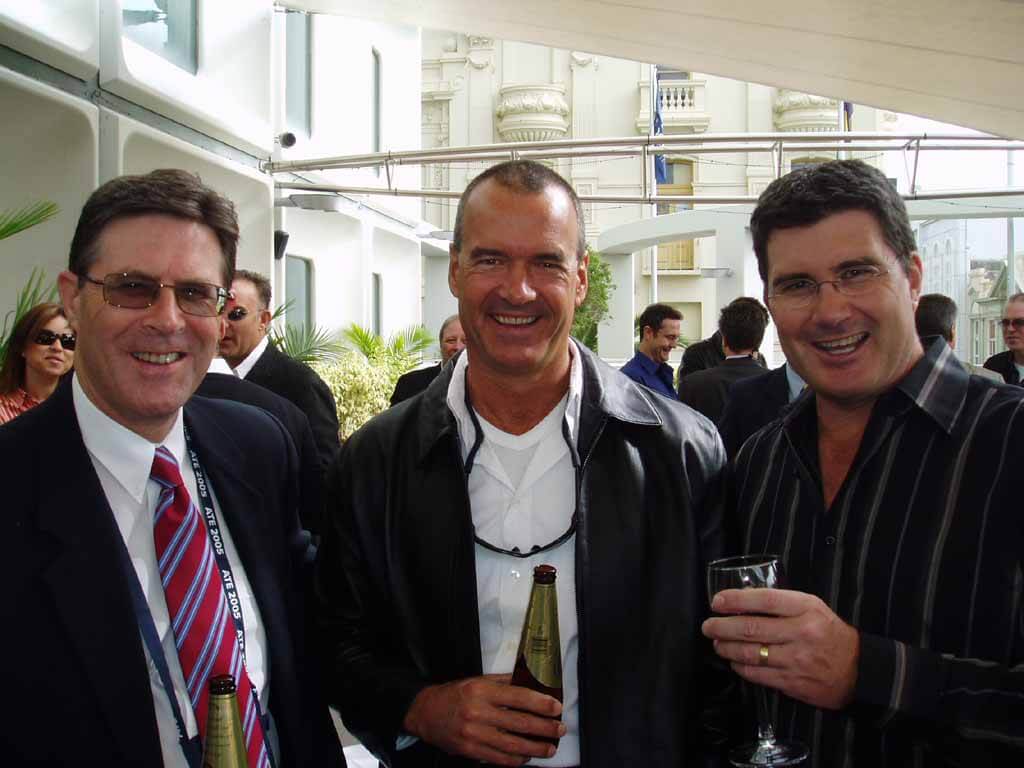
Bill Calderwood, Rod Punshon and Gary Young
Bill Calderwood, Rod Punshon and Gary Young
Road Warriors core
Road Warriors core